

Pallet Flow Rack Best Practices for Collapsible Plastic Crates
SOLUTIONS
FOR THE TOUGHEST APPLICATIONS
"*" indicates required fields
Design Considerations for Manufacturing Parts Storage with Pallet Flow Rack
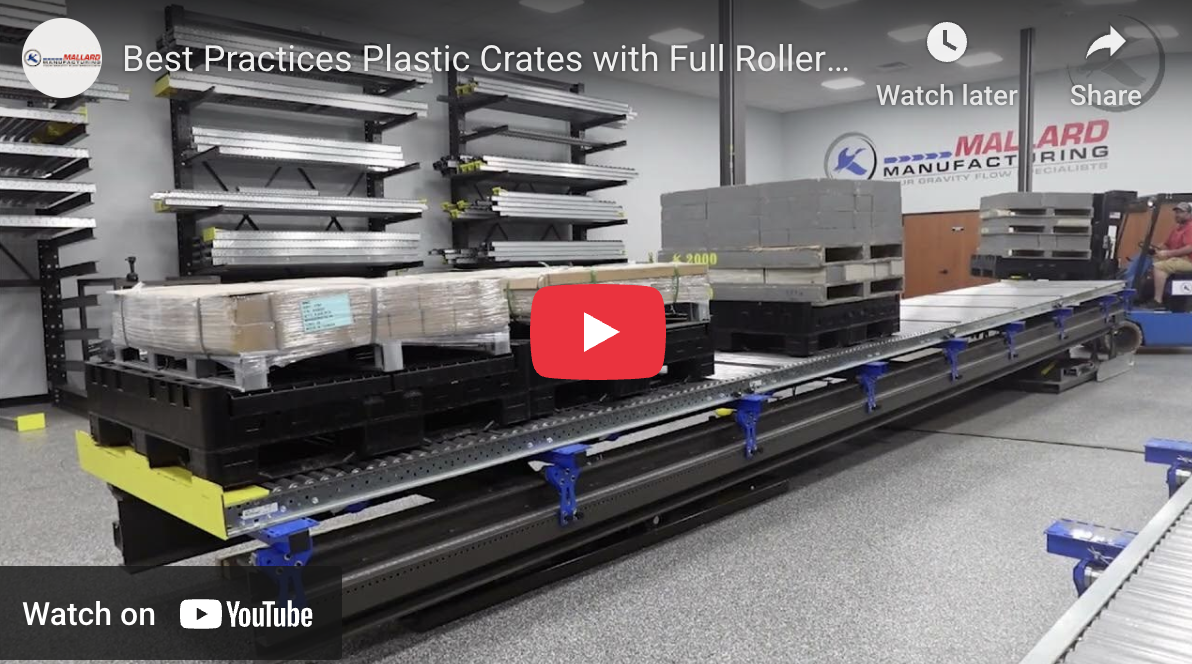
In parts manufacturing, you often have a known set of SKUs, high on-hand inventory, and a steady pace of replenishment. That’s where pallet flow rack earns its keep: it uses gravity to keep product moving, reduces handling touches, and helps you store deeper without relying on powered equipment.
Mallard designs gravity flow solutions built to maximize space and productivity in demanding industrial environments.
In this post, we’ll break down what we tested, why the lane was designed the way it was, and the best-practice takeaways you can apply when configuring for collapsible plastic crates.
Pallet Flow Rack Basics
If you’re new to pallet flow rack, this quick overview will help you understand the test design. If you’re already a gravity flow pro, feel free to skip ahead.
Pallet flow rack is a high-density storage option used in warehousing, manufacturing, and distribution. It increases storage capacity by enabling deep-lane storage, which reduces the number of aisles required compared to standard selective racking. Each lane in a pallet flow rack typically stores a single SKU, thereby enhancing picking speed and minimizing errors during fulfillment.
To make deep lanes practical and productive, pallet flow rack uses slightly pitched lanes to move pallets using gravity from the load side to the pick/extraction side, supporting FIFO (first-in/first-out) inventory rotation. Lanes are built with rollers or wheels and may include speed controllers or pallet separators to help manage pallet movement safely and consistently.
Depending on the design and application, pallet flow racks can store 2 to 20+ pallets deep per lane. It’s especially effective for high-volume inventory and can be tailored to specific requirements such as pallet/crate design, pallet size, load weight, and the level of flow control needed.
What Crate Features Can Cause Pallet Flow Hang-Ups?
 |
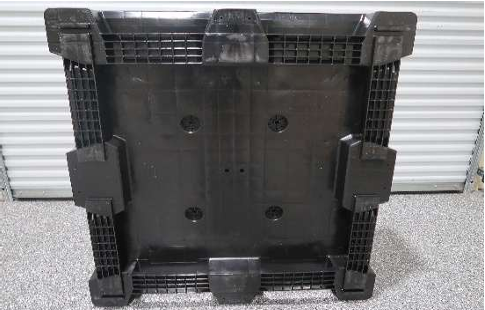 |
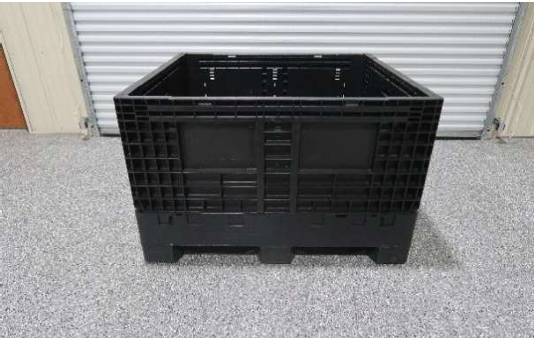
| Collapsible Plastic Crate | Bottom Runners |
Tested container: collapsible plastic container, 44.5″ W x 48″ D x 47″ T.
Bottom runners: two runners, 3.5″ wide x 1″ thick, not full depth, with a gap in the middle.
That runner gap matters. On many lane types, inconsistent bottom support can increase the chance of hang-ups, uneven speed, or poor indexing—especially during unloading. In other words, if the load doesn’t make consistent contact, it won’t behave consistently.
Best practice: document runner width, runner height, runner placement, and any mid-span gaps before lane selection. It’s one of the fastest ways to prevent “it worked on paper” surprises later.
Full-Roller Pallet Flow Rack for Collapsible Plastic Crates
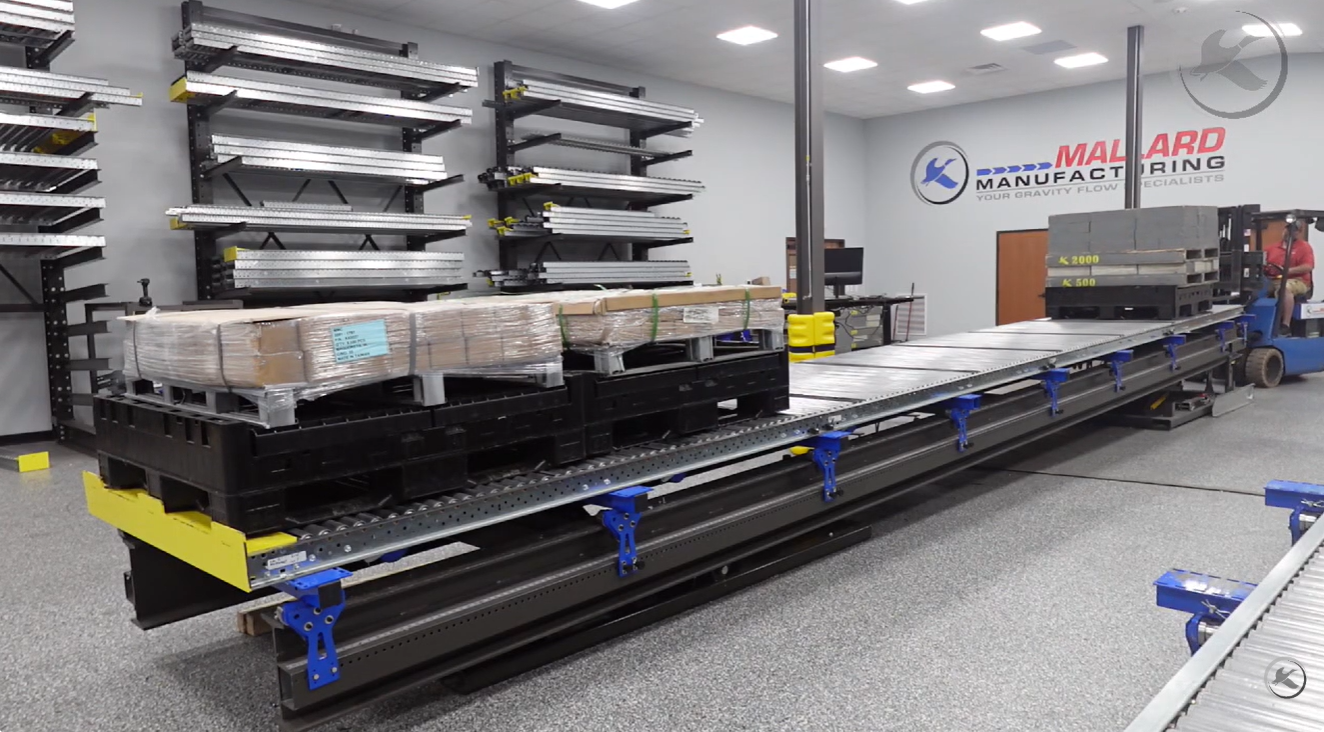
Pallet Flow Rack for Manufacturing Parts Storage
In pallet flow rack, hang-ups are usually traced back to inconsistent bottom support—so we start by evaluating runner design and how the load contacts the lane. These crates have bottom runners that don’t extend the full length, which can create uneven support during flow. That’s why Mallard used full-roller pallet flow rack to increase contact points and deliver the most consistent, reliable flow.
Pallet Flow Lane Design
- Full-roller configuration: 1.9″ diameter rollers on 2″ centers
- Controls: FIBA speed controllers at 48” intervals
- Lane length: 33′
- Pitch: 3/8″ per foot
- Load: 2,500 lb
Why this matters (in plain terms):
- Full rollers maximize contact under the crate, helping it bridge runner gaps and reducing the chance of hesitation or hang-ups.
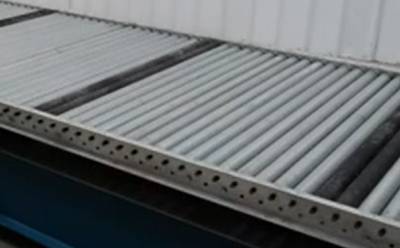
- Speed controllers prevent heavier loads from building momentum over long runs, improving predictability and operator comfort. FIBA speed controllers use a two-part approach: rubber-coated Ultra-Grip rollers set in the lane work with an undermount brake-style roller that engages the Ultra-Grip rollers to slow the load and reduce crate velocity as it travels down the lane.
If you’re designing pallet flow rack for collapsible plastic crates, this is a strong starting point when runner support is anything less than ideal.
 |
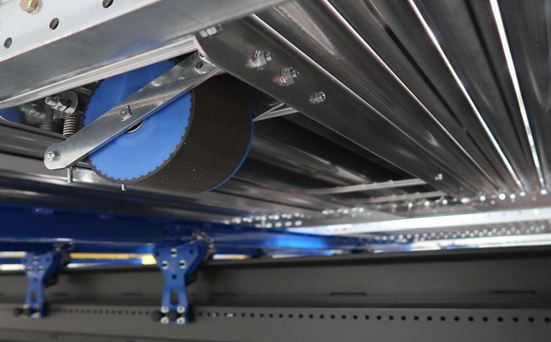 |
| Ultra-Grip Rollers | FIBA Undermount Speed Controller |
Pallet Flow Rack Test Results
The test loads were plastic, 2-runner pallets. According to the engineering notes:
✔ Pallets flowed down the lane with positive results
✔ FIBA speed controllers kept pallet movement under control
✔ During unloading, the team did not experience hang-up issues
If hang-ups occur, they can typically be addressed by:
- Using the plugging method, or
- Loading another pallet into the lane to help resolve the condition
Key takeaway: the lane design handled the runner-style load well in testing, and the unloading process stayed controllable—especially with proper operator technique.
Quick Design Checklist For Crate Handling on Pallet Flow Rack
Use this as your “pre-quote” and “pre-layout” checklist:
- Confirm bottom runner compatibility (width, thickness, spacing, and gaps)
- Validate load weight (max + typical) and center-of-gravity assumptions
- Choose lane type to match the load: Plastic pallets/crates and runner gaps or inconsistent support → consider full roller pallet flow
- Set lane controls intentionally: long lanes + heavier loads → plan for speed controllers
- Confirm pitch based on the load weight + desired control
If you’re storing parts inventory in collapsible plastic crates, pallet flow rack can be a powerful way to increase density and keep work moving—but only if the lane is designed for the load you actually have. Bottom runners and pod-footed pallet bottoms are a classic “small detail” that changes the entire lane conversation, and this test is a good example of how to address challenges with good design.
Contact the Mallard Manufacturing gravity-flow experts for a solution that fits your operational goals.
