
Push-Back Flow Rack Loading and Unloading: Best Practices for Smooth Operation
SOLUTIONS
FOR THE TOUGHEST APPLICATIONS
"*" indicates required fields
Unloading Push-Back Flow Rack
 Proper loading and unloading techniques aren’t just about keeping things moving—they’re essential for protecting your system and ensuring a safe, efficient work environment. Mishandled pallets can lead to system damage, flow disruptions, or costly delays. While it’s essential that pallets are in good condition for any flow rack system, consistent and conscientious operator technique is the key to ensuring long-term, reliable performance.
Let’s walk through the step-by-step best practices to help you get the most from your push-back flow rack.
Before Loading
✅ Inspect pallets – avoid broken bottom boards, protruding nails, or loose deck boards
✅ Secure plastic wrap – dangling film can get caught in rollers
✅ Confirm lane readiness – clear debris or obstructions from flow lanes
Loading Procedure
- Align the pallet squarely at the lane entry.
- Lift the pallet 2–3 inches above the roller or wheeled lane.
- Lower the pallet gently into position — no dropping or angling.
- Back out slowly, allowing the ramp stop to secure the pallet.
- For additional pallets:
- Push the front pallet back into the lane as you make room for the new pallet.
- Lower the new pallet into place on the flow rails.
- Back out slowly to allowing the end stop to hold the pallet in the lane.
Unloading Procedure
- Secure the front pallet with the forks, leaving a 4–6 inch gap at the rear to avoid catching the next pallet behind it.
- Lift pallet 2–3 inches above the lane… enough to clear the end stops.
- Back out slowly, controlling the speed of the rear pallet(s) as they advance towards the front position.
- If the pallet doesn’t advance, re-enter the lane briefly to gently nudge the load — this is known as the plugging method.
Pro Tip: Most hang-ups are caused by pallet damage or loose wrap—not the lane itself. Best practices include inspecting pallet integrity and ensuring the load is tightly wrapped (no dangling film) before placing it into the flow lane.
Mallard Push-Back Flow Rack: The Right LIFO Fit
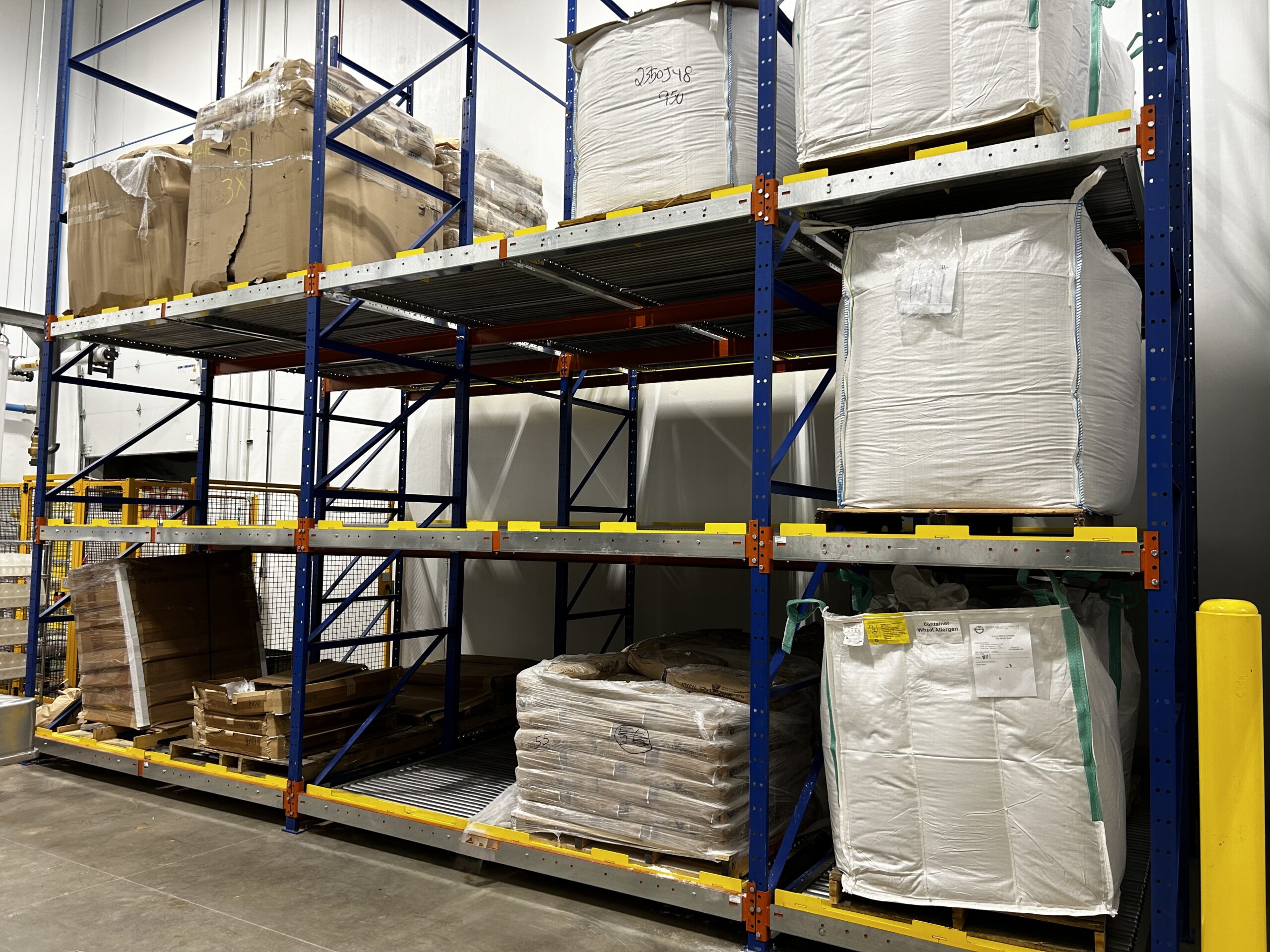
Proper loading and unloading are critical to maximizing the performance of your push-back flow rack system—and we’re here to help you every step of the way. From custom testing to expert design support, Mallard delivers gravity flow solutions built around your operation.
With no carts to maintain, Mallard’s push-back flow rack reduces complexity while enhancing system performance. Every system is engineered to meet the exact specs of your operation—whether you’re managing mixed pallet types, variable loads, or high-volume SKU rotation.
You get:
- Deeper storage capacity in less floor space
- Custom testing based on your actual pallet types
- Fewer moving parts, meaning less downtime and lower cost of ownership
